Kwa Ndege, Tassis, Nairobi
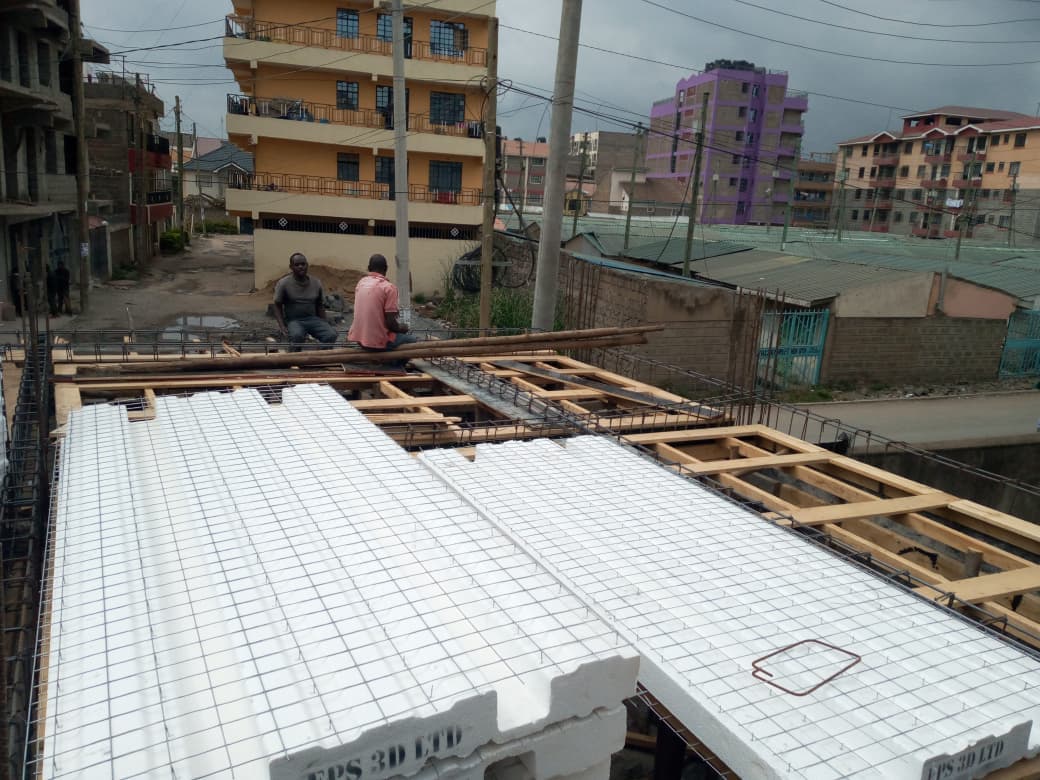
EPS 3D moves from specification to live construction — captured here as the installation team, with Kossy Langat among the structural leadership, stages and installs branded EPS 3D LTD floor panels across a Nairobi residential slab.
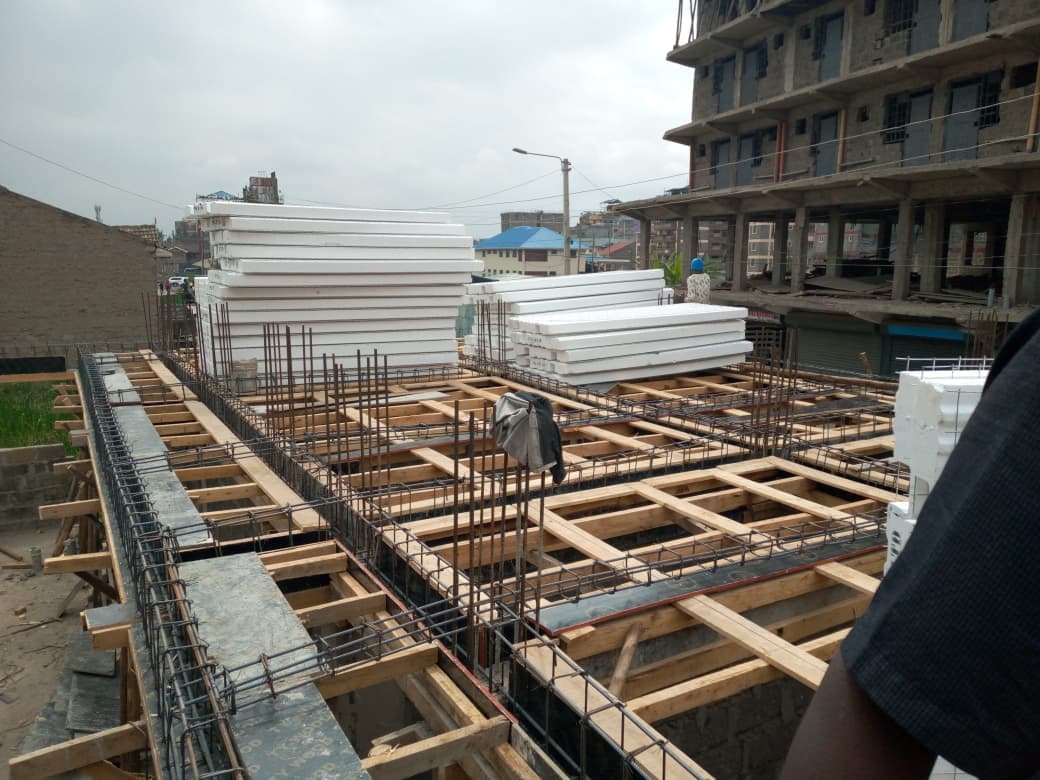
EPS 3D floor panels replace the dense timber prop scaffolding of conventional slab construction with a lighter, faster structural system. At Tassis, you can see exactly how: prepared formwork below, reinforcement in place, and EPS 3D LTD panels being laid across the full slab field. As General Manager at Haven Heights Limited, Ruiru, Kossy was part of the leadership driving this installation — ensuring the system performed as designed, on the ground.
.jpeg&w=3840&q=75)
The Challenge
Conventional RC slab systems demand heavy formwork, dense propping, and long curing cycles that lock a residential site for weeks. The challenge was to demonstrate that EPS 3D delivers a structurally equivalent floor with significantly less material, less scaffolding, and a faster installation sequence.
Our Intervention
The on-site installation team executed the full EPS 3D sequence at Tassis — deck preparation, reinforcement layout, panel staging, and active placement across the slab field. The EPS 3D LTD panels, visible with their branded markings, reduce structural dead load compared to a solid concrete slab, while the steel wire mesh faces and shotcrete fill deliver equivalent structural strength. Kossy, as General Manager at Haven Heights Limited, Ruiru, was among the senior leaders overseeing the technical delivery of this system.
"Tassis proves the EPS 3D case on the ground, not in a brochure. The system reduces slab dead load, cuts scaffolding requirements, and compresses the floor completion cycle. For residential developers managing material costs and build timelines, that is a competitive argument — and this is what it looks like in practice."
Site Record
.jpeg&w=3840&q=75)